

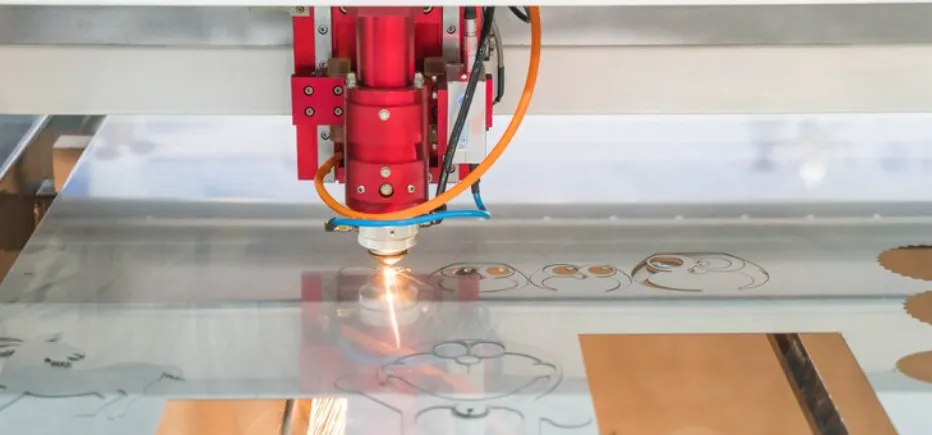
In today’s fast-moving industrial world, manufacturers are always looking for ways to increase production speed while maintaining high quality. One of the most effective technologies helping achieve this balance is the fiber optic laser. This advanced system is widely used in modern manufacturing because it delivers precise cutting, engraving, welding, and marking with great efficiency. By using light transmitted through flexible optical fibers, these systems offer better control and performance compared to traditional laser methods. As industries continue to evolve, fiber optic laser technology is becoming a key part of smarter and more efficient production processes.
What is a Fiber Optic Laser System
A fiber optic laser system is a type of laser technology that uses optical fibers to generate and deliver a highly focused laser beam. Unlike older laser systems, it does not rely on large mirrors or complex mechanical parts. Instead, the beam is created and transmitted through a flexible fiber cable, which makes the system more compact and stable. The fiber optic laser is known for producing a very fine and concentrated beam, which allows manufacturers to work on different materials such as metal, plastic, and even delicate components with high precision and consistency.
How It Improves Speed in Manufacturing
One of the biggest advantages of a fiber optic laser is its ability to significantly improve production speed. The system works at a very high energy efficiency level, which means it can process materials faster without wasting energy. Because the beam is delivered directly through optical fibers, there is minimal loss of power, resulting in quicker operations. In addition, the system requires less setup time compared to traditional machines, allowing manufacturers to switch between tasks more quickly. This helps industries increase output while reducing delays in production cycles.
How It Improves Accuracy and Precision
Accuracy is extremely important in manufacturing, especially when dealing with complex designs and small components. The fiber optic laser provides a highly focused beam that can be controlled with great precision. This allows manufacturers to create detailed cuts, fine engravings, and exact welds without damaging surrounding material. The system also produces very little heat distortion, which helps maintain the original shape and quality of the product. As a result, businesses can achieve consistent results even in large-scale production, reducing errors and material waste.
Benefits in Modern Manufacturing Industry
The use of fiber optic laser systems brings many benefits to modern manufacturing. It improves overall productivity by combining speed and precision in one technology. The system is also low maintenance because it has fewer moving parts, which reduces downtime and repair costs. Additionally, it is energy efficient, making it a cost-effective solution for long-term use. Many industries, including automotive, electronics, aerospace, and medical manufacturing, rely on this technology to meet high-quality standards while keeping production efficient and reliable.
Conclusion
Fiber optic laser systems have transformed the way manufacturing processes are carried out by offering both speed and accuracy in one powerful solution. Their ability to deliver precise results quickly makes them an essential tool in modern industries. As technology continues to advance, the role of fiber optic laser systems will become even more important in helping manufacturers improve efficiency, reduce waste, and maintain high-quality production standards.